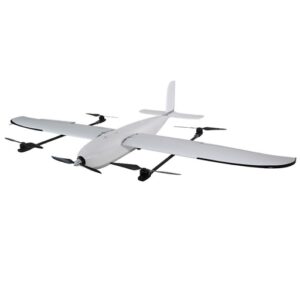


Stable battery telemetry is not just a nice-to-have in commercial UAVs. It is what keeps your voltage alarms honest, your current draw logs usable, and your capacity estimates consistent from flight to flight. The ZeroOne OnePMU AiR is built for that job, providing DroneCAN-based voltage and current monitoring for demanding multirotor, fixed-wing, and VTOL power systems.
In a modern UAV electrical stack, choosing the right Power Module category is what ties battery monitoring, regulated avionics power, and wiring reliability together. MotioNew supports engineers and procurement teams who need a PMU that integrates cleanly, holds calibration well, and matches the connector and battery range used on the airframe.
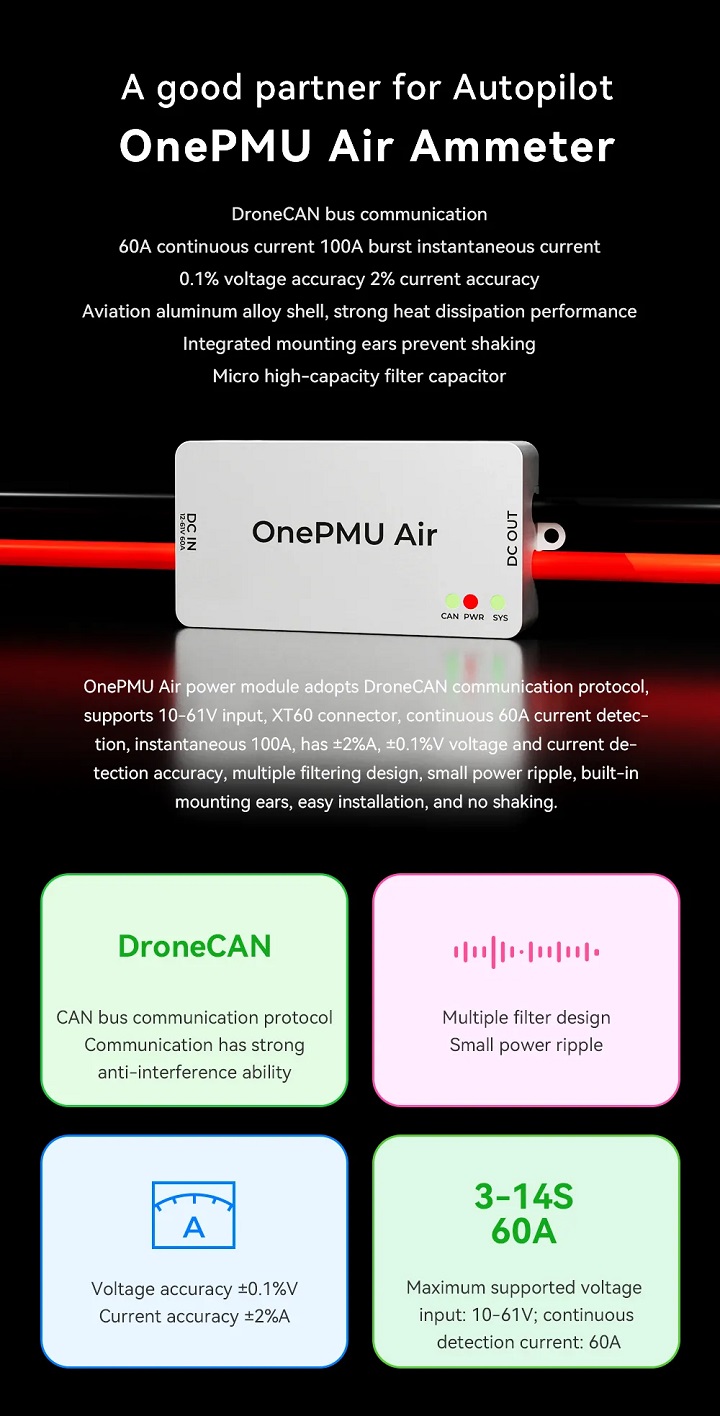
The ZeroOne OnePMU AiR is designed around the DroneCAN ecosystem, which means battery data is delivered over the CAN bus instead of relying on analog ADC inputs. In practice, that reduces susceptibility to noise in long harnesses, helps keep measurements consistent across builds, and simplifies integration when the autopilot already uses CAN peripherals.
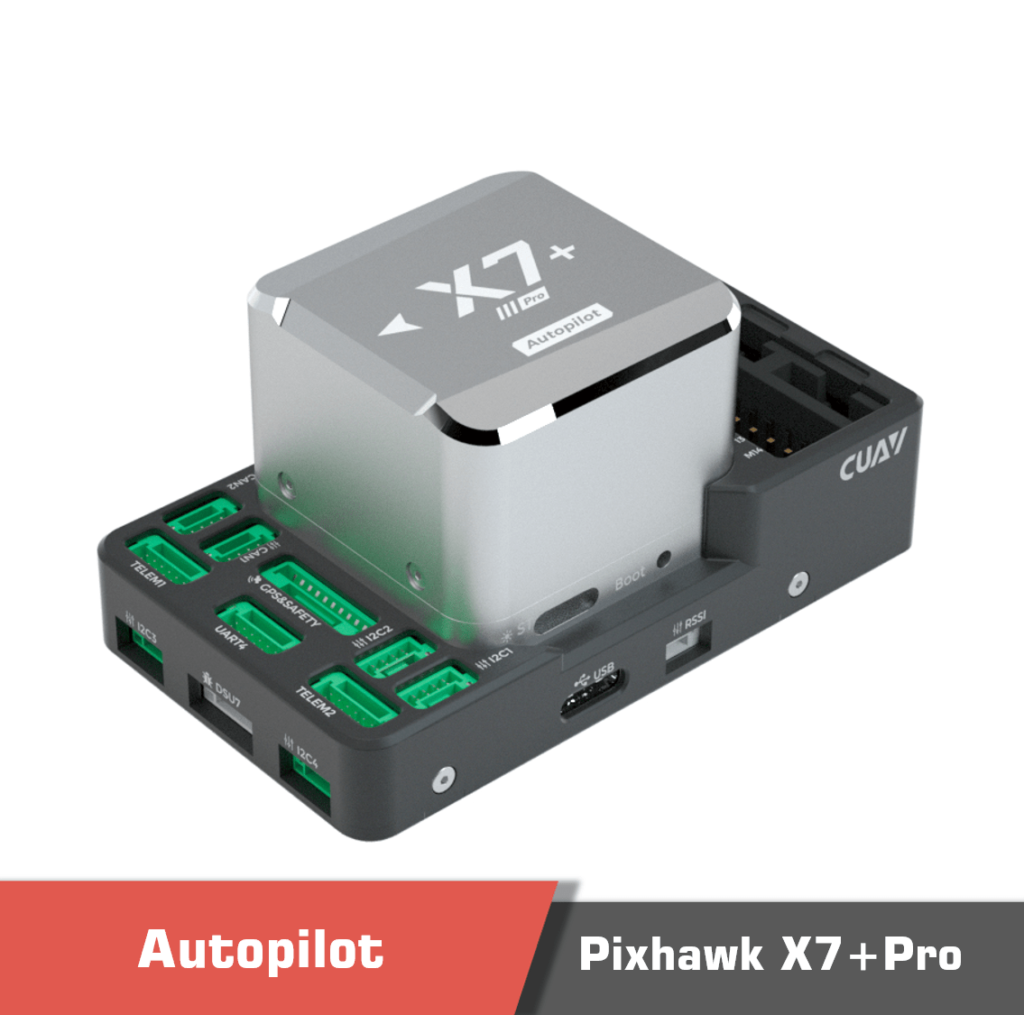
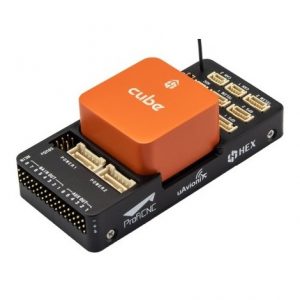
For teams standardizing on a CAN-based architecture, the OnePMU AiR is a good fit alongside a modern Flight controller that already exposes DroneCAN ports and supports CAN battery monitor discovery and configuration in the firmware. DroneCAN power monitoring is a widely supported approach in ArduPilot and PX4 documentation, and it is commonly used in commercial UAV power systems where repeatability matters.
ZeroOne specifies high monitoring accuracy for this PMU class, including 0.04 V voltage accuracy and 0.15 A current accuracy, which helps reduce “false drift” when you compare logs across aircraft or across seasons of maintenance. That level of measurement stability is especially useful when you tune failsafes and validate endurance changes after swapping props, payloads, or motor KV.
The OnePMU AiR supports 3S to 14S battery input, covering a broad range of UAV configurations from smaller test platforms up to high-voltage industrial builds. For most teams, that means you can keep one PMU design in your BOM while changing pack voltage across variants, as long as your downstream avionics and propulsion are rated accordingly.
If you are sourcing packs for a 14S platform, MotioNew can align the PMU harnessing and test approach with your 14S Battery selection so the full power chain remains consistent from incoming inspection to final assembly.
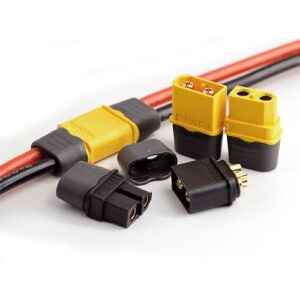
The OnePMU AiR is commonly supplied with an XT90 connector, which is a practical choice for higher-power UAV wiring where connector robustness and contact area matter. If your airframe standard uses a different battery lead, MotioNew can provide harness adaptation and continuity checks so you do not compromise reliability by mixing connector styles across production batches.
DroneCAN power telemetry is only as reliable as the CAN physical layer. In production builds, the most common issues are avoidable: inconsistent ground reference between power and avionics, poorly routed CAN lines near high-current conductors, and missing or incorrect termination in larger CAN networks.
MotioNew engineers can help you define a wiring standard that includes CAN routing, strain relief, and connector retention so your ZeroOne OnePMU AiR installation remains stable under vibration and service cycles.
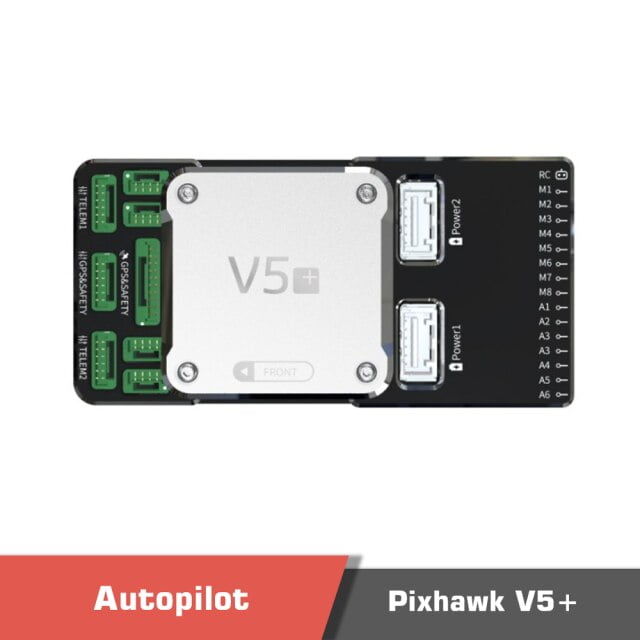
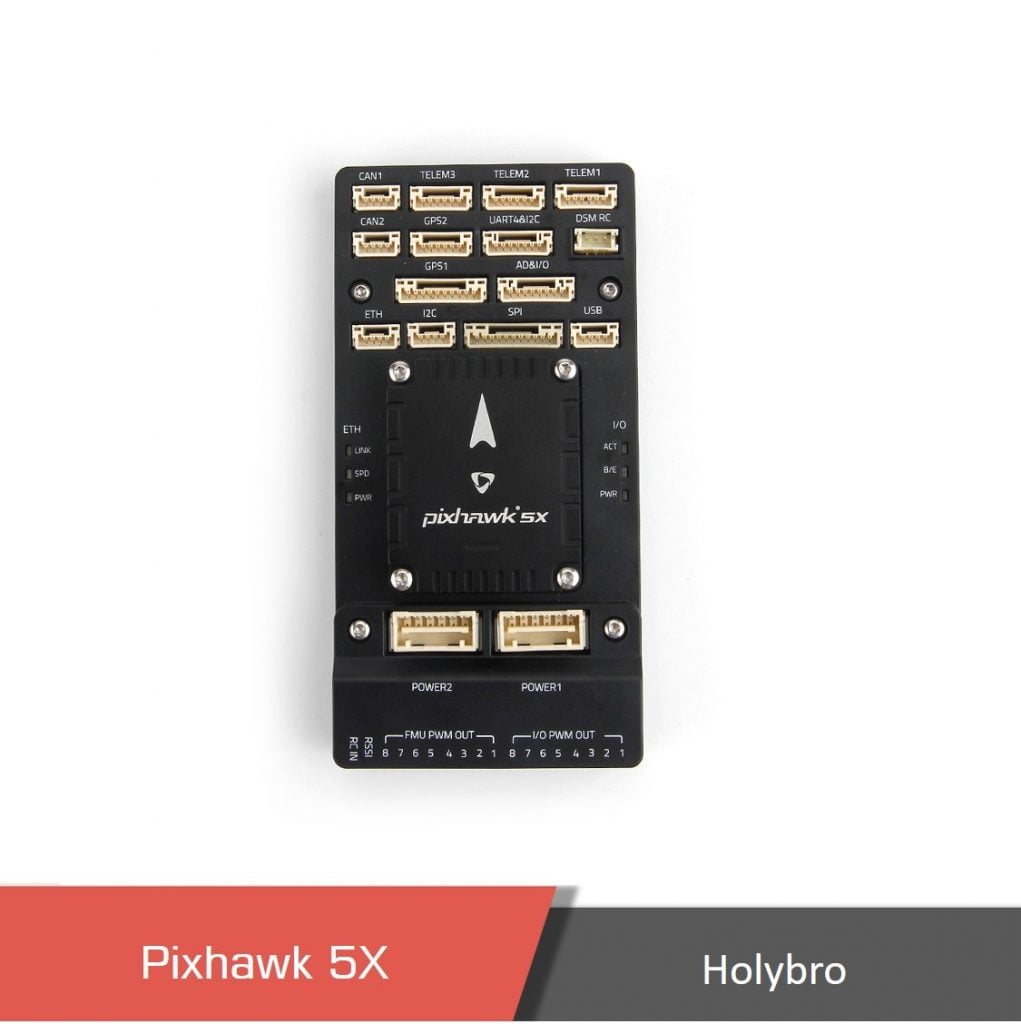
Most teams pair a DroneCAN PMU with a pixhawk flight controller or an equivalent autopilot that supports DroneCAN battery monitor parameters and CAN driver enablement. ArduPilot’s documentation for CAN power monitors highlights standard configuration patterns and emphasizes factory calibration and DroneCAN protocol support on PMUs in this class.
If your program uses PX4, PX4’s guidance on DroneCAN power modules shows the typical parameter path for subscribing to battery data over CAN and validating that the module is publishing as expected. MotioNew can support that integration workflow during bench bring-up and airframe validation.
The ZeroOne OnePMU AiR is a strong match when you need a DroneCAN-enabled power management unit that supports:
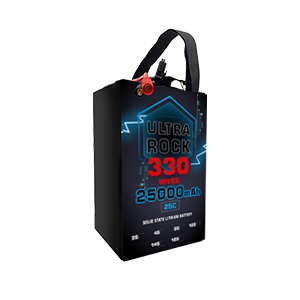
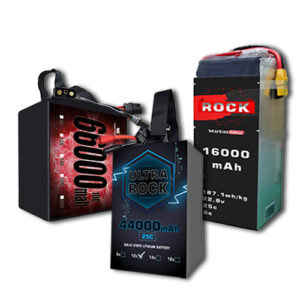
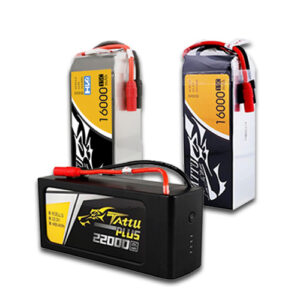
It also pairs naturally with high-discharge Lipo Battery choices used in industrial multirotors and VTOL aircraft, where accurate current sensing improves your ability to compare mission profiles and battery health across fleets.
Connect the PMU to the CAN network, confirm that the autopilot has DroneCAN enabled, and then set the battery monitor subscription to use DroneCAN data. MotioNew can provide integration support to verify detection, validate live voltage and current telemetry, and confirm logging behavior during bench tests.
It means the PMU can accept battery voltages associated with 3-cell through 14-cell LiPo packs, which gives you flexibility across different UAV power architectures. MotioNew can help you map your battery selection, connector standard, and avionics power plan so the full system remains within ratings and testable at scale.
Yes. MotioNew supports project quotations with tiered price breaks for bulk and wholesale procurement. Share your target quantity, delivery region, and connector requirements, and our team will respond with a structured quote and integration notes for your build standard.
Yes. MotioNew supports OEM-style workflows including incoming inspection guidance, harness standardization, and engineering support for fleet consistency. For bulk shipments, we can help define acceptance checks that focus on telemetry sanity, connector continuity, and installation repeatability.
Buy From MotioNew, and Leave The Technical Worries Behind
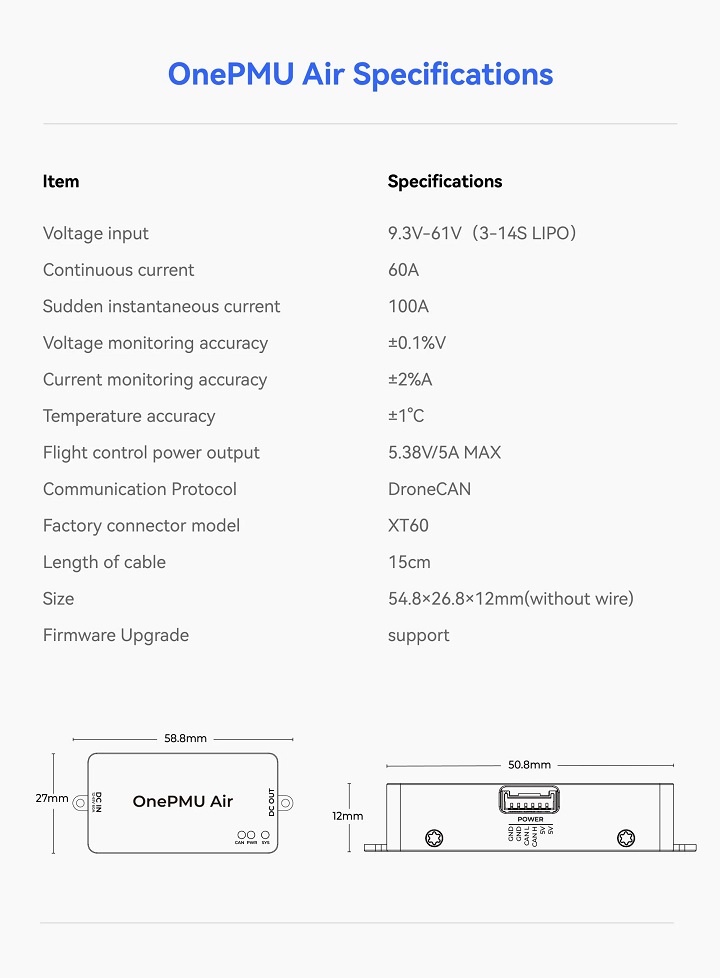
| Item | Specification |
|---|---|
| Voltage input | 9.3V–61V (3–14S LiPo) |
| Continuous current | 60A |
| Sudden instantaneous current | 100A |
| Voltage monitoring accuracy | ±0.1%V |
| Current monitoring accuracy | ±2%A |
| Temperature accuracy | ±1°C |
| Flight control power output | 5.38V / 5A MAX |
| Communication protocol | DroneCAN |
| Factory connector model | XT60 |
| Length of cable | 15cm |
| Size | 54.8 × 26.8 × 12mm (without wire) |
| Firmware upgrade | Support |
| Parameter | Value |
|---|---|
| Overall length | 58.8mm |
| Width | 27mm |
| Height | 12mm |
| Side-view length | 50.8mm |
Please contact us for more information.
Please contact us for more information.
You must be logged in to post a review.
No account yet?
Create an Account











Reviews
Clear filtersThere are no reviews yet.