
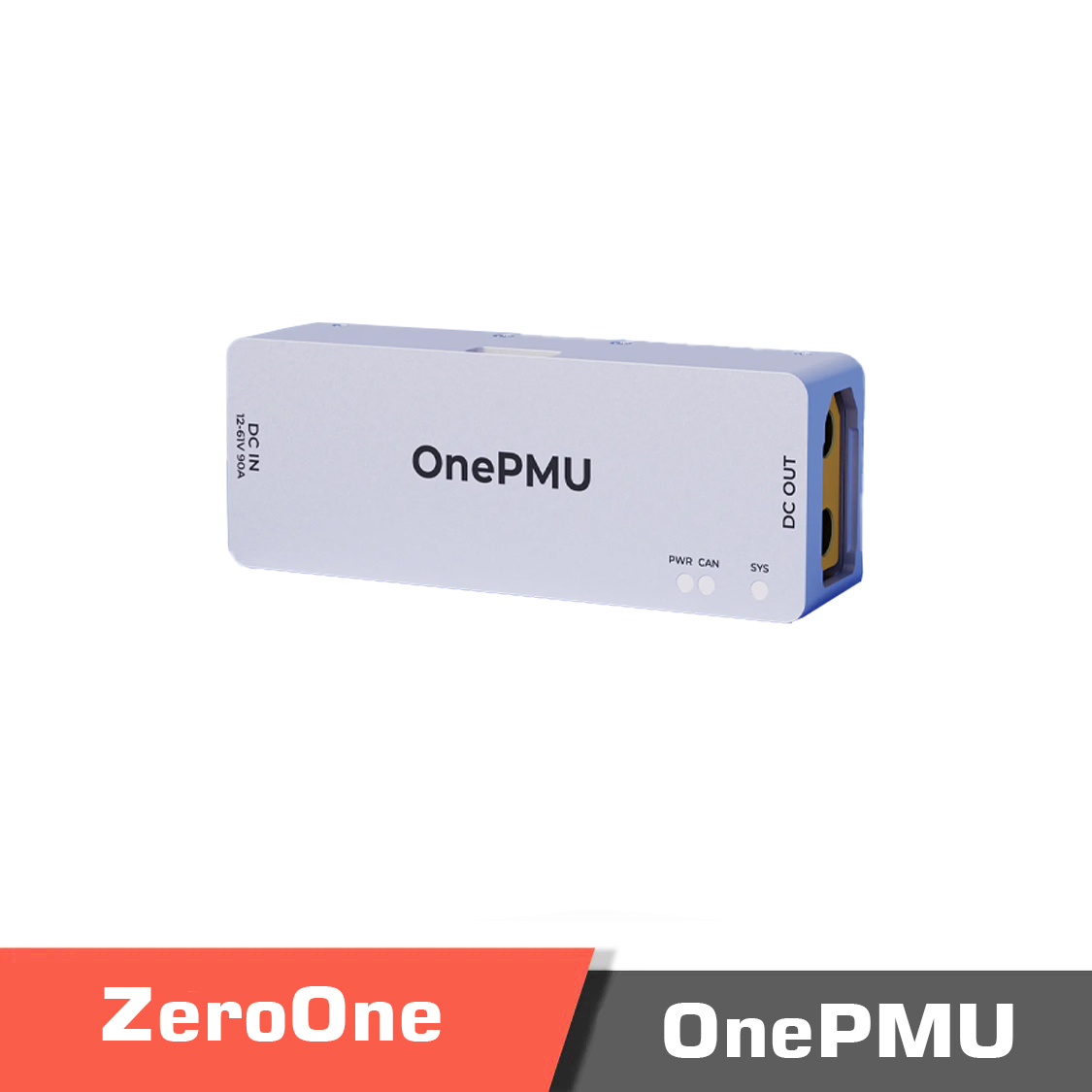
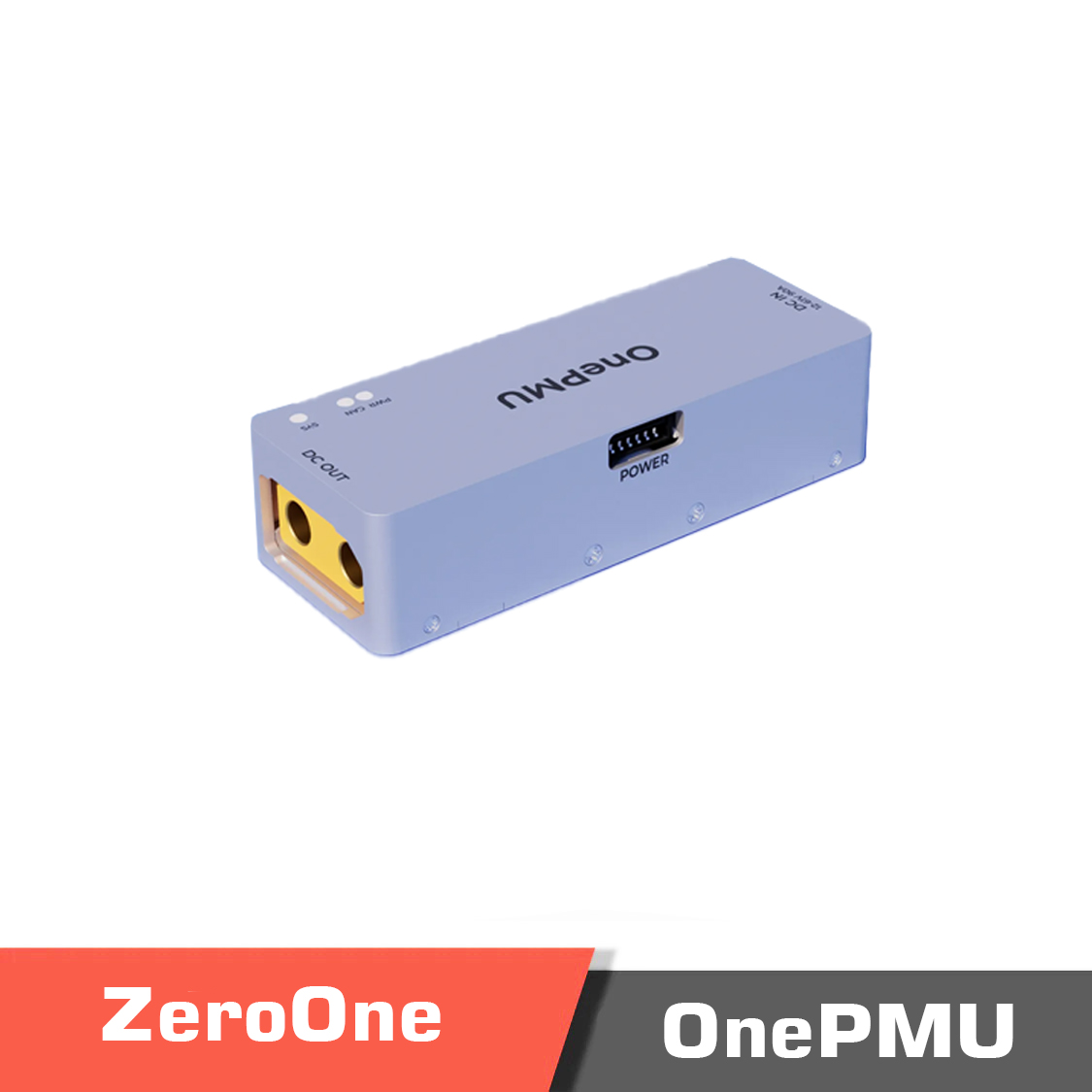
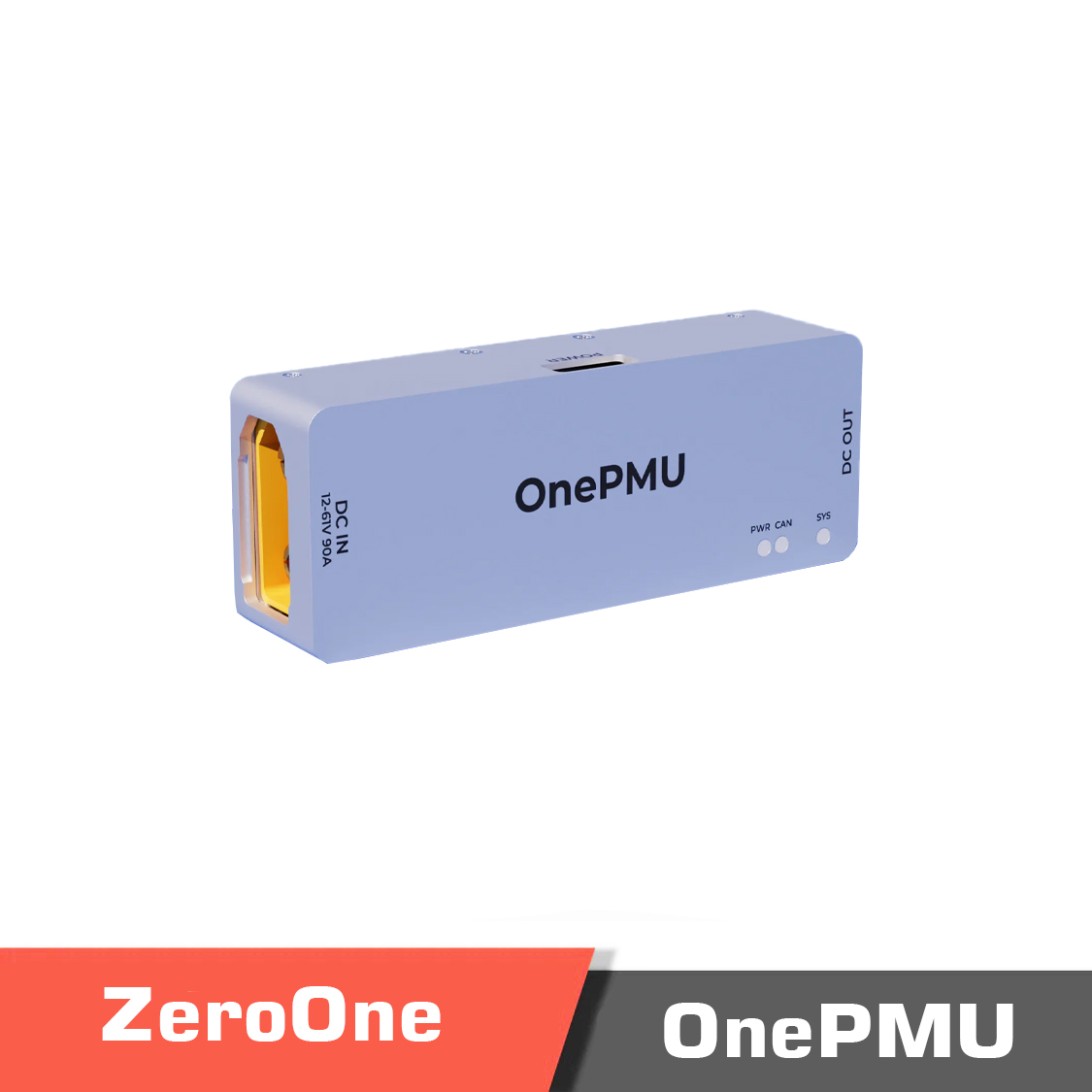


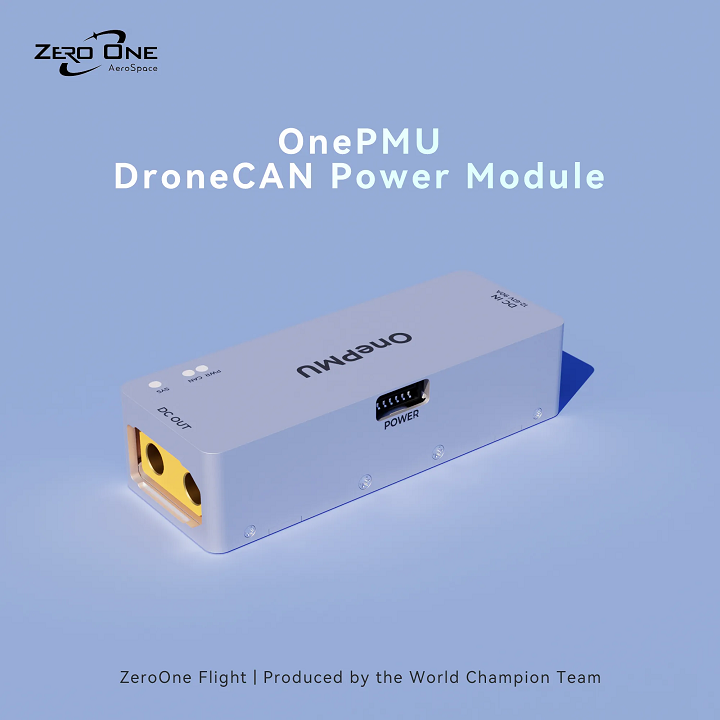
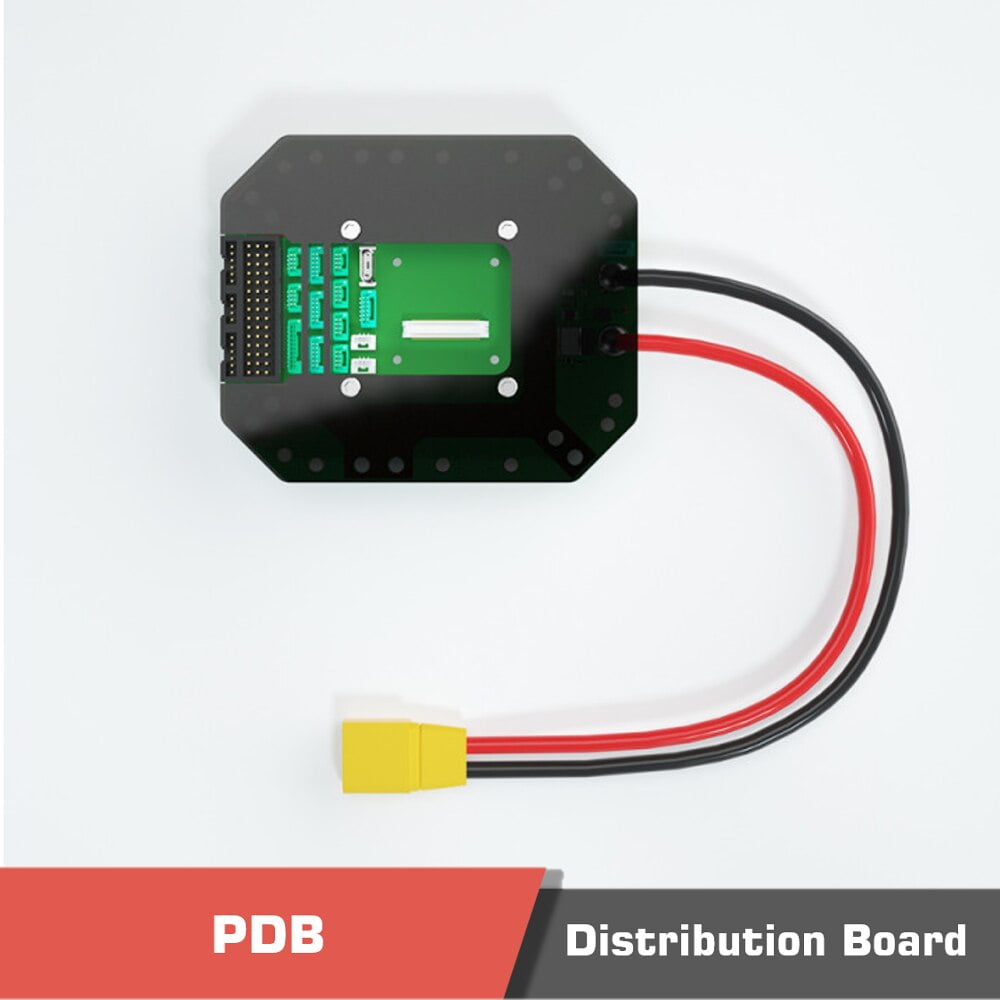
The ZeroOne OnePMU is a DroneCAN-enabled power management unit that is designed to deliver high-accuracy battery telemetry to your autopilot while supporting a wide 3S to 14S input range. For engineering teams that need cleaner power data for monitoring, logging, and safety thresholds, the ZeroOne OnePMU power module helps reduce the guesswork that comes from noisy or drifting voltage and current readings.
In a modern UAV electrical architecture, choosing the right Power Module is not only about routing battery power. It is also about getting dependable, repeatable measurements that your flight stack can trust in real time. That is where a DroneCAN PMU with tight sensing accuracy becomes a practical upgrade for professional builds.
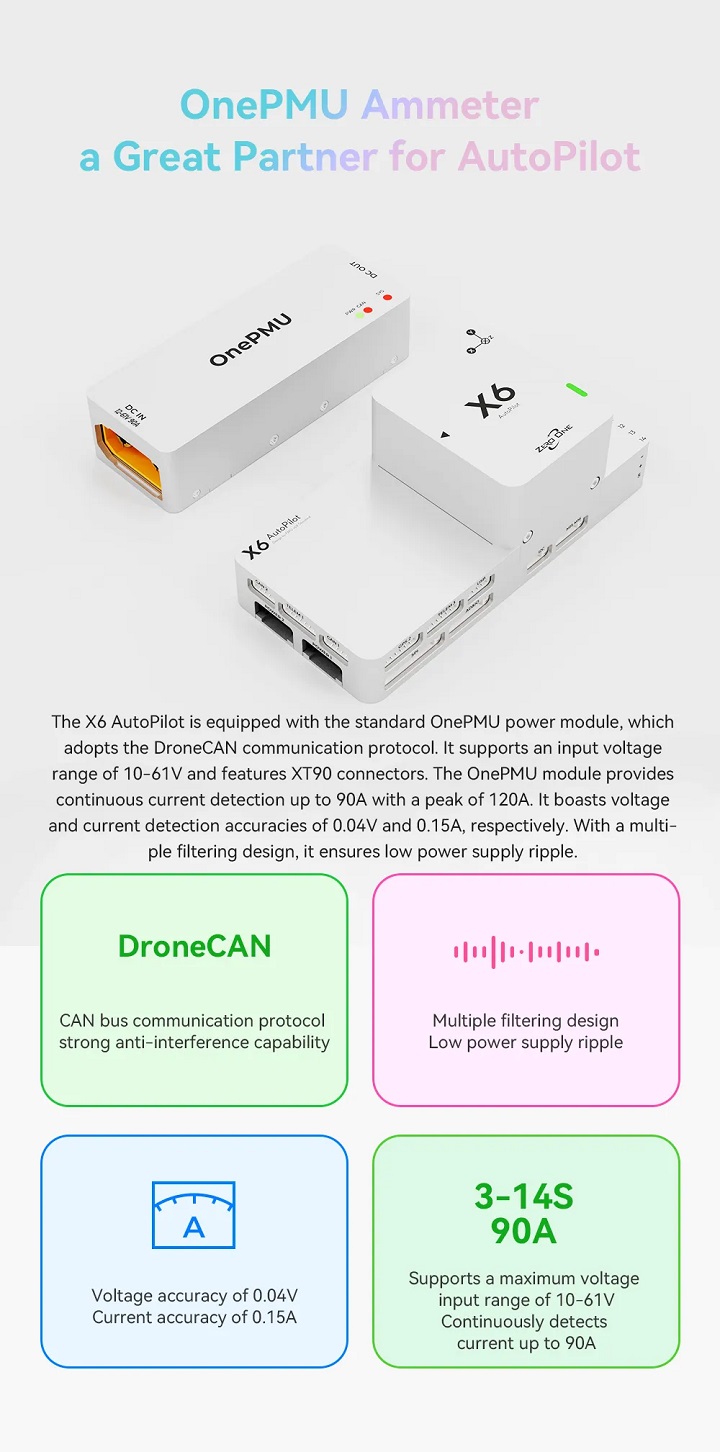
This module reports power data over the DroneCAN protocol, which is especially useful on platforms where CAN wiring reliability, device discovery, and system scalability matter. Compared with simple analog sense lines, a DroneCAN approach can improve noise immunity across longer wire runs and helps standardize how multiple peripherals share telemetry with the autopilot.
From an integration perspective, this DroneCAN-ready PMU is a strong fit for CAN-capable autopilots and carrier boards where you want consistent battery status reporting, clear log traces, and simplified diagnostics during commissioning.
The unit is specified with sensing accuracy of 0.04 V for voltage and 0.15 A for current. In practice, tighter accuracy improves your ability to set realistic low-voltage warnings, validate endurance models, and compare battery health across fleets. It also reduces the time you spend calibrating power parameters when you move the same airframe design from prototype to production.
If your workflows depend on repeatable flight logs, the ZeroOne OnePMU also supports cleaner data for post-flight analysis and maintenance decisions.
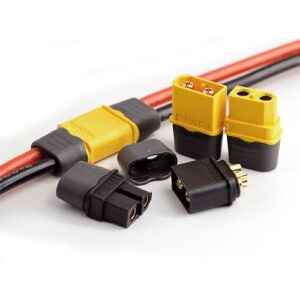
ZeroOne OnePMU supports a broad 3S to 14S voltage input range, making it suitable for many industrial multirotor and VTOL power trains. The input uses an XT90 connector, which is commonly selected for higher-current battery connections and quick field swaps.
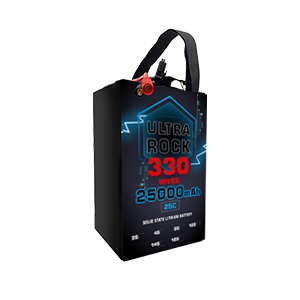
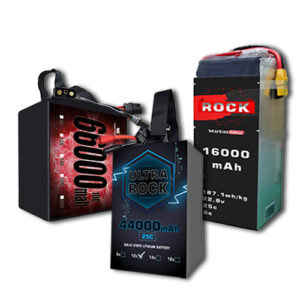
For teams running higher-voltage packs, it is worth aligning your battery selection and harnessing to the same class of components used in your production builds. MotioNew can also help you source compatible 14S Battery options and matching connectors so the full power chain stays consistent.
To use the ZeroOne OnePMU DroneCAN power module effectively, confirm your target autopilot has CAN support and a supported DroneCAN firmware stack. Many teams pair DroneCAN peripherals with a modern Flight controller that exposes dedicated CAN ports or offers expansion through a carrier.
During bring-up, pay attention to:
MotioNew engineers can provide step-by-step wiring guidance and configuration checklists, especially when you are integrating multiple DroneCAN peripherals on a shared bus.
Accurate measurement is not only a sensor problem. It also depends on connectors, crimp quality, conductor gauge, and how you route high-current lines. With XT90-based battery inputs, make sure your harness is built for the expected continuous current and that strain relief is handled properly for vibration environments.
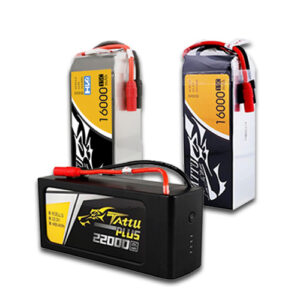
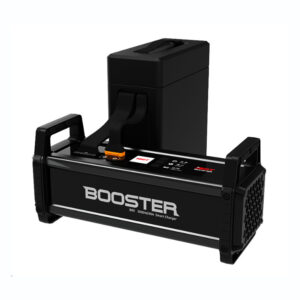
If you are building systems around high-energy lithium packs, MotioNew can help align the overall power solution, including battery selection, charging strategy, and spares planning. Our catalog covers professional-grade Lipo Battery options for UAV programs that need consistent performance across batches.
For prototype builds, it is easy to accept close enough telemetry. For production fleets, small measurement errors add up quickly when you set alert thresholds, compute remaining capacity, or audit incident logs. A high-accuracy PMU such as the OnePMU is most valuable when your commissioning workflow is consistent:
MotioNew supports integration services for teams that want to standardize these steps across a product line, with technical documentation that your manufacturing partners can follow.
The ZeroOne OnePMU 3S to 14S power module with XT90 connectivity is a strong match for professional UAV systems that require dependable battery telemetry and flexible voltage input coverage. Common use cases include:
By using DroneCAN telemetry and specifying high accuracy for both voltage and current, ZeroOne OnePMU helps teams focus on flight performance and reliability instead of chasing power data inconsistencies.
Yes. ZeroOne OnePMU is designed as a DroneCAN power module with a wide 3S to 14S input range, and it provides high-accuracy voltage and current telemetry that supports reliable battery monitoring on compatible autopilots.
Integration typically involves connecting the CAN lines to a CAN-enabled autopilot port, ensuring proper termination, and configuring battery monitoring parameters so telemetry is recognized. MotioNew engineers can help validate wiring, bus layout, and configuration for your specific flight stack.
MotioNew can quote the latest price based on your quantity, lead time, and integration needs. We support bulk purchasing for OEM programs and can provide technical validation services to reduce deployment risk.
Yes. MotioNew supports wholesale procurement with batch coordination, documentation support, and engineering assistance for fleet rollouts. Share your target volumes and schedule and we will propose a supply plan that fits your program.
Buy From MotioNew, and Leave The Technical Worries Behind
| Item | Specification |
|---|---|
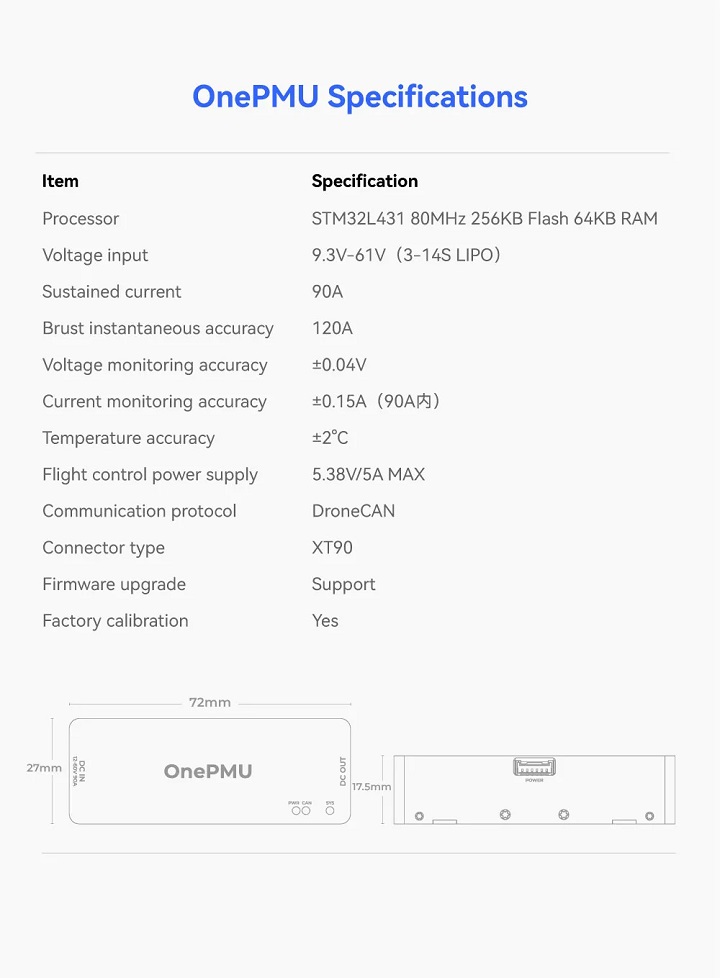
| Processor | STM32L431, 80MHz, 256KB Flash, 64KB RAM |
| Input Voltage | 9.3V–61V (3–14S LiPo) |
| Sustained Current | 90A |
| Burst (Instantaneous) Current | 120A |
| Voltage Monitoring Accuracy | ±0.04V |
| Current Monitoring Accuracy | ±0.15A (up to 90A) |
| Temperature Accuracy | ±2°C |
| Flight Controller Power Supply | 5.38V / 5A MAX |
| Communication Protocol | DroneCAN |
| Connector Type | XT90 |
| Firmware Upgrade | Supported |
| Factory Calibration | Yes |
Please contact us for more information.
Please contact us for more information.
You must be logged in to post a review.
No account yet?
Create an Account











Reviews
Clear filtersThere are no reviews yet.